
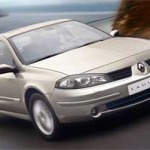
Laguna, Renault’s keystone product in the fleet sector, has always kept pace with the mainstream in its appeal and design. As was the case with its predecessor, the new Laguna is offered in two body styles, Hatch and Sport Tourer. The nip ‘n tuck includes subtle but effective changes to the exterior, a new facia, improved safety elements and – most significant from the fleet angle – two new Euro IV-compliant diesel engines. There is also the GT 205, a hotshot version with sports oriented chassis and muscular 205bhp Turbo engine.
At the press launch in Italy, Keith Hawes, Renault’s Fleet Director, stressed that the re-vamp is much more than a simple facelift. ‘There has been a lot of effort put into improving build quality – both actual and perceived – and to harnessing new technologies to improve comfort, value and safety.’ He understandably predicts that the top fleet prospect will be the 1.9 dCi 130 Euro IV diesel version, available from this spring, with well over 50 per cent of its sales being to fleet customers.
The front of the car has been cleaned-up aesthetically, with a new one-piece, integrated front bumper and grille. The bonnet line is shortened and convex, the new headlamps extend along the sides and the Renault badge is now more vertical. At the rear, the Hatch version has a slightly changed tail light arrangement. Inside, there is a new dashboard and centre console with the hi-fi and heating controls placed higher. There are two interior colour schemes according to trim level: dark charcoal or light beige and instead of velour there is micro fibre cloth.
The dCi 130 version impresses as a civilised motorway cruiser. Its engine is in fact the established 1.9 dCi 120 developed to be Euro IV compliant – and with a 10bhp power boost to 130bhp as a bonus. There is also a particle filter (FAP) on the exhaust, making it one of the greenest diesels available within its power rating bracket. The entry-level 1.9 dCi 90 Euro IV is now upgraded to 95hp and the fourth dCi engine remains the 2.2 dCi 150 – which can be had with a five-speed proactive automatic transmission. The petrol-engined range starts with the 135bhp 2.0-litre (the 1.8 from the previous range is dropped), the 2.0 Turbo 165 is now uprated to 170bhp and the 3.0 V6 with 210bhp and a five-speed proactive automatic transmission remains available on the range-topping luxury model, the Initiale.
As with the previous version, there are six trim levels – three majoring on luxury – Expression, Privilege and Initiale and three ‘sporty’ – Extreme, Dynamique and GT. The Renault Card with hands-free engine ignition, as available on Megane/Scenic and Espace, debuts on Laguna. The parking brake is now automatic and a new Carminat 3D navigation and communication system is available. The system combines a new “birdview” facility, a 4x50W audio system with 6CD changer in the dashboard and the ability to play CDs in MP3 format – plus hands-free controls for a Bluetooth telephone.
The system offers voice recognition to control the navigation and the telephone, automatic zoom when approaching a change of direction, the simultaneous presentation of three alternative itineraries, and a “junction view” display of motorway intersections using synthetic images. On brief acquaintance, it appears a sophisticated and user-friendly set-up.
A second flagship version will be available alongside the Initiale, the Laguna GT 205. It is only available with the new 2.0-litre Turbo engine with 205bhp and 221lb.ft of torque, giving a 0-62mph time of 7.2 seconds and a top speed of 146mph. Its chassis is performance- tweaked, there are specially developed Michelin tyres on 17-inch wheels – and a 10mm-lower ride height. The air intake grille is lowered, there is a rear wing on the Hatchback, satin-finished roof rails and dark tinted rear side windows on the Sport Tourer. Inside, the leather upholstery is a mixture of dark charcoal and China red. The gear leverknob is satin-finished aluminium and the dashboard surround moulding has a chrome satin finish.
The first Laguna set a true benchmark in safety, being the first car in the upper-medium sector to gain the five-star EuroNCAP crash test rating. Inevitably, there is a strong emphasis on safety with this revamp. For example, there are eight airbags – and also head restraints with integral adjustment for the front seats. The rear side seats can be fitted with convertible child head-restraints which, in the closed position, look the same as a standard adult head restraint but when opened, flip lower to form a protective cocoon around the head of a child seated on a booster.
The headlamps have a “lifting dipped beam” function to improve light output and in addition, the beam height is constantly controlled, both statically and dynamically, to take account of the car’s pitch attitude. Also, the ESP system is now claimed to take account of tyre wear while the ABS/ESP unit is faster reacting. There is ASR traction control function to complement the ESP when starting from rest or accelerating in conditions of poor adhesion.
From behind the wheel, the impression is that Renault’s quest for greater perceived quality should get the thumbs-up. The interior trim materials look and feel good and on the road the car feels ‘solid’ and noticeably more refined. Much care and attention has obviously been paid to the suppression of noise – whether road, wind or powertrain induced. Chassis modifications across the range mean increased roll stiffness and more efficient damping while the GT 205, with its own specific sports chassis set up, delivers particularly responsive handling together with excellent stability.
FW OVERVIEW
Laguna’s mid-life face-lift is evolutionary rather than revolutionary – but that is no bad thing in its particular fleet segment. It has had the effect of evolving Renault’s already very competent upper-mid sector car into a genuinely ‘mature’ product. From the fleet perspective, the availability of a Euro IV compliant diesel – with its attendant fiscal advantages – must make the Laguna an even more attractive option than it was before.
RENAULT LAGUNA 1.9 DCI 130 5-DR
Engine cyl/cc . . . . . . . . . . . . . . . . . . . . 4/1,870
Max power . . . . . . . . . . . 130bhp @ 4,000rpm
Max torque . . . . . . . . . . . 221lb.ft @ 2,000rpm
0-62mph . . . . . . . . . . . . . . . . . . . . . . . 10.2secs
Top speed . . . . . . . . . . . . . . . . . . . . . . .127mph
Combined MPG . . . . . . . . . . . . . . . . . 47.9mpg
CO2 emissions . . . . . 154g/km (17% in ’05/06)
Article kindly reproduced courtesy of Fleetworld.net – the leading magazine for fleet descision-makers.